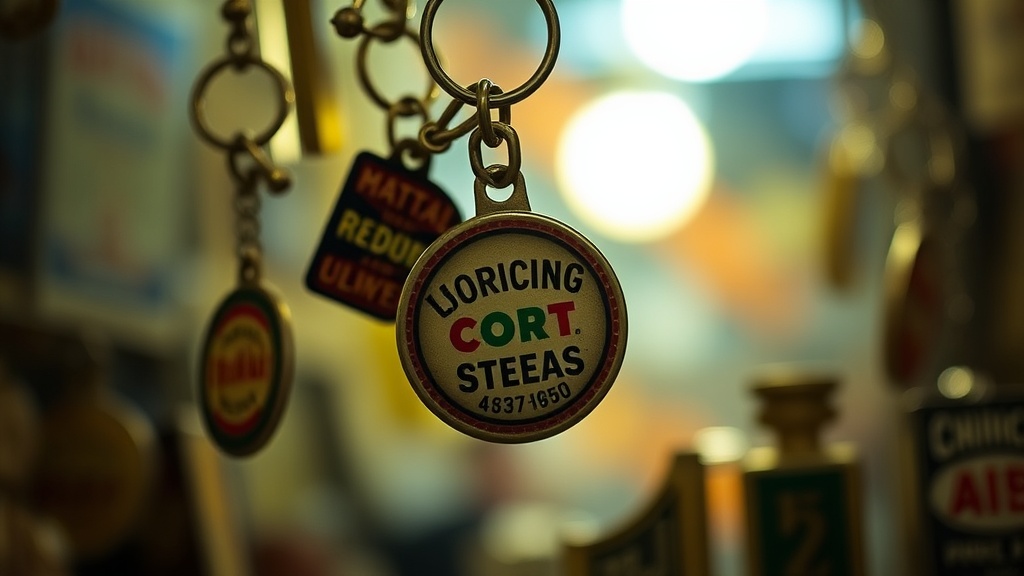
10 Vintage Advertising Keychains Worth More Than You Think

Early 1900s Hotel Key Fobs
1950s Gas Station Giveaways
Brewery and Distillery Keychains
Automobilia Advertising Keychains
World's Fair Souvenir Keychains
What Are the Most Valuable Vintage Advertising Keychains?
The most valuable vintage advertising keychains are typically promotional items from major automotive brands, early Coca-Cola releases, rare oil company premiums, and wartime-era military commemoratives. These small metal collectibles—once given away free at gas stations, dealerships, and soda fountains—now command serious prices at auction. Condition matters enormously. A mint-in-box piece can fetch ten times more than the same keychain with worn plating or missing paint. This post covers ten specific categories where collectors are seeing real returns, plus what to look for when hunting at flea markets and estate sales.
Most people don't think twice about the advertising keychain rattling around in a junk drawer. Big mistake. These pocket-sized pieces of commercial history represent a golden age of American marketing—when companies invested in heavy brass, enamel work, and clever designs to win customer loyalty. The durability of these materials means many survived decades of use. Today, serious collectors specialize in everything from brewery fobs to travel souvenirs, and prices keep climbing as the supply of pristine examples dwindles.
Why Do Some Advertising Keychains Sell for Hundreds of Dollars?
Certain advertising keychains sell for hundreds because of rarity, condition, and historical significance—particularly those from defunct companies, limited promotions, or regional businesses that never distributed widely. Scarcity drives the market. When a company closes its doors or changes its logo, existing promotional items become finite artifacts. The keychain that seemed disposable in 1957 becomes irreplaceable in 2025.
The 1960s and 70s produced particularly collectible pieces from companies like Standard Oil, Sinclair, and Texaco. These weren't flimsy giveaways—they were solid cast metal with thick chrome plating, often featuring moving parts or functional elements like thermometers or level gauges. The Texaco Fire-Chief keychain from the early 1960s—depicting the brand's iconic fire helmet logo in red enamel—regularly sells for $75-$150 in excellent condition. Find one with original packaging, and you're looking at $300 or more.
Automotive keychains represent another high-value category. Before the 1973 oil crisis changed American car culture forever, dealerships handed out substantial promotional items. The Corvette Stingray key fob from 1963—shaped like the split-window coupe itself—is a grail piece for both car collectors and keychain specialists. Recent eBay sales show clean examples moving at $200-$400. (The split-window design only lasted one model year, which adds to the mystique.)
Brewery advertising occupies its own corner of the hobby. Pre-prohibition beer keychains are exceptionally rare—most were melted down for scrap metal during WWII—but post-war pieces from regional breweries command strong prices. The Falstaff Brewing keychain with spinning bottle design, distributed between 1955 and 1965, brings $50-$125 depending on condition. National brands like Budweiser produced countless keychains, but it's the obscure regional brewers—Hamm's, Grain Belt, Olympia—that serious collectors pursue.
The "Big Three" Oil Company Keychains
Petroleum advertising keychains form the backbone of many collections. Three brands dominate the premium market:
- Sinclair Oil — The green dinosaur logo (introduced in 1930) remains instantly recognizable. Vintage Sinclair keychains from the 1950s-60s featuring the brontosaurus mascot in enamel sell for $40-$150. The rare "Dino" figural keychains—three-dimensional dinosaur shapes—can exceed $500.
- Esso (Exxon) — The "Put a Tiger in Your Tank" campaign produced memorable keychain premiums. The tiger-shaped fob from 1964-1968, showing the Esso tiger mid-leap, regularly achieves $100-$250 at auction.
- Shell — The scallop shell logo appeared on countless promotional items. Look for the heavyweight brass keychains from the 1950s with rotating center pieces—these were desk-quality items, not pocket trinkets. Clean examples sell for $60-$175.
The hunt happens everywhere. Estate sales in Rust Belt cities—think Cleveland, Pittsburgh, Detroit—often yield automotive-related pieces from retired factory workers. Rural flea markets throughout the Midwest turn up oil company premiums that never migrated to coastal collectors. And don't overlook online estate auctions from small-town auction houses; they're often poorly cataloged, meaning keychains get lumped into "box lots" of miscellaneous items.
What Should You Look for When Buying Vintage Keychains?
When buying vintage keychains, examine the plating condition, check for working moving parts, verify authenticity through manufacturer marks, and assess whether the design matches documented historical examples. Original plating should show consistent color—brass should look like brass, chrome like chrome. Repaired or rechromed pieces lose significant value. Moving parts (spinners, thermometers, clickers) should function smoothly without binding.
Here's a practical condition guide for evaluating pieces in the wild:
| Grade | Description | Value Impact |
|---|---|---|
| Mint | No wear, original packaging, all functions working | Full market value or premium |
| Excellent | Minimal wear, plating 95%+ intact, functions working | 70-90% of top value |
| Very Good | Moderate wear, plating 80%+ intact, minor issues | 40-60% of top value |
| Good | Significant wear, plating loss, possible repairs | 15-30% of top value |
| Poor | Heavy damage, non-working parts, missing elements | Minimal—parts value only |
Reproductions flood the market. The tell? Weight and detail. Authentic vintage pieces feel substantial—they're made from solid brass or zinc alloy, not lightweight aluminum. Enamel work should be glassy and slightly recessed into the metal, not printed on top. When in doubt, reference specialized collector resources like the Society for Historical Archaeology, which maintains documentation on commercial artifacts and dating methods.
Coca-Cola: The Blue Chip of Keychain Collecting
No advertising brand matches Coca-Cola for collector recognition and liquidity. The company has produced keychains consistently since the 1920s, creating a deep catalog that spans every era of American design. Early celluloid pieces from the 1930s—featuring the classic contour bottle shape—command $150-$400 depending on condition. The 1950s "Sprite Boy" premiums (depicting the elfin mascot Coke used before moving to polar bears) bring $75-$200.
Here's the thing about Coke collectibles: they're heavily documented. The Coca-Cola Company archives contain extensive records of promotional items, which helps authenticate pieces. This also means there's less chance of scoring an undervalued rarity—dealers know exactly what they have. That said, regional variations exist. Canadian-market keychains, Mexican distributors, and European adaptations often feature different artwork and sell at premiums to completionist collectors.
The 1960s "Things Go Better With Coke" jingle keychains—small metal rectangles with the slogan and a bottle graphic—are surprisingly valuable despite their simple design. Why? Production quality. These were solid brass with heavy chrome plating and raised lettering. They were built to last, and surviving examples often look nearly new. Expect to pay $40-$100 for clean pieces.
Military and Political Commemoratives
Wartime advertising keychains occupy a specialized niche. During WWII, companies like Boeing, Lockheed, and Grumman produced keychains for employees and suppliers featuring aircraft designs. These weren't public promotional items—they were internal recognition pieces, which makes them scarcer. A Boeing B-17 keychain from 1943 recently sold for $650 at a military memorabilia auction in Texas.
Political campaign keychains blur the line between advertising and ephemera. The most valuable come from presidential campaigns that captured the public imagination. John F. Kennedy's 1960 campaign produced brass keychains with the memorable "A Time for Greatness" slogan. Authentic examples bring $100-$300. (Reproductions exist—check for correct period typography and proper aging patina.)
Travel and Tourism Keychains Worth Hunting
Before Instagram, people collected physical proof of their travels. Hotels, airlines, and tourist attractions produced keychains as souvenirs, and the best examples now command surprising prices. The TWA (Trans World Airlines) keychains from the 1960s Jet Age—featuring the airline's distinctive globe logo—sell for $50-$150. Pan Am pieces are similarly sought after, particularly those commemorating specific routes like the historic round-the-world service.
Route 66 memorabilia remains hot. Individual businesses along the Mother Road produced countless keychains: motels, diners, gas stations, souvenir shops. The National Park Service Route 66 documentation provides historical context for these pieces. Keychains from defunct but famous establishments—like the Boots Motel in Carthage, Missouri, or the Blue Whale of Catoosa, Oklahoma—regularly achieve $30-$80. The keychain becomes a tangible piece of lost Americana.
State-shaped keychains from the 1950s-70s represent an accessible entry point. These brass or aluminum pieces—outlining Texas, California, Florida, or other tourist destinations with stamped landmarks—typically sell for $10-$40. Not big money, but they're plentiful, fun to hunt, and build knowledge for spotting the rare variants that do command premiums.
The Hidden Gems: Regional and Defunct Brands
The biggest opportunities exist in local and regional advertising. The Stuckey's pecan log keychain from the 1960s—the roadside chain famous for southern hospitality and sugary treats—brings $40-$100. Howard Johnson's restaurant keychains from the orange-roof era achieve similar prices. When these companies closed locations or rebranded, their promotional items became instant collectibles.
The catch? Documentation. Unlike Coca-Cola or Texaco, regional businesses didn't keep archives. Provenance matters enormously. A keychain from "Joe's Gas Station" in Tulsa might be worthless—or it might be the last surviving artifact of a Route 66 landmark destroyed in the 1970s. Research separates the treasures from the trash. Local historical societies, newspaper archives, and city directories help establish whether that mysterious keychain represents something meaningful.
Current collecting trends favor mid-century modern design. Keychains with clean lines, geometric shapes, and atomic-age styling—think 1950s-60s automotive, aerospace, and technology companies—are seeing price appreciation. The chunky, colorful designs of the 1980s haven't hit their stride yet, which makes them affordable hunting for forward-thinking collectors. The cycle continues. What's dismissed today becomes tomorrow's grail.