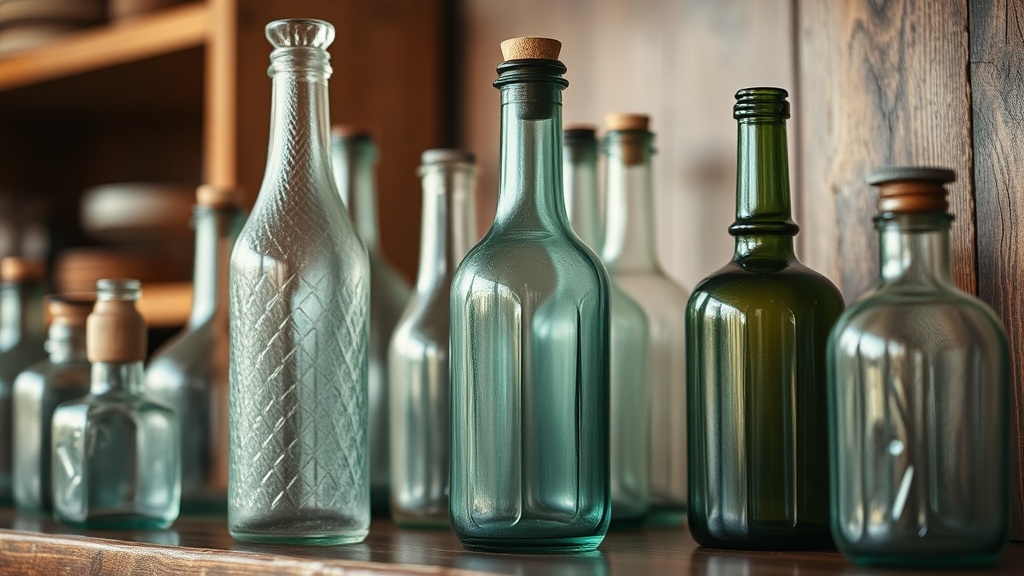
How to Identify Genuine Vintage Glass Bottles and Small Collectibles

Identifying Authentic Vintage Glass and Small Collectibles
This post covers the specific markers used to differentiate between genuine vintage-era glass bottles and modern-made replicas. You'll learn how to spot manufacturing defects that indicate age, how to check for seam lines, and why the weight of a piece often tells the real story. For collectors of small-scale glass and bottles, distinguishing between a mid-century relic and a recent reproduction is the difference between a meaningful addition and a wasted investment.
When you're browsing flea markets or online auctions, the temptation to grab a piece that looks "old" is high. However, a shiny, perfect bottle doesn't always mean it's a treasure. Often, the most valuable pieces are those that show the imperfections of the era they were born in. Whether you are hunting for apothecary jars, soda bottles, or small glass trinkets, you need a toolkit of visual and tactile checks to verify what you're holding.
What are the signs of an old glass bottle?
One of the first things to look for is the presence of bubbles, often called "seeds," in the glass. In older manufacturing processes, air bubbles were common and often unavoidable. If you see tiny, irregular bubbles suspended within the glass, you might be looking at a piece that was hand-blown or made in an older mold. Modern automated production is too precise; it tends to produce perfectly clear glass without these tiny character marks.
Another major indicator is the seam. Modern bottles are made using two-part molds that leave a visible seam running up the side of the bottle, often stopping at the shoulder. Older, hand-blown or early machine-made bottles might have no seam at all, or the seam might be irregular. If you see a seam that runs all the way up to the very top of the lip or rim, there is a high chance it is a modern-made piece. You can learn more about the technical aspects of glass manufacturing at the Corning Museum of Glass, which tracks the evolution of these techniques.
Weight is another deceptive factor. Older glass is frequently heavier and thicker than contemporary glass. If a bottle feels suspiciously light or thin—almost like plastic or modern thin-walled glass—proceed with caution. Authentic vintage pieces often have a certain heft that comes from the density of the material used during that specific era. It isn't just about the weight; it's about the balance of the object in your hand.
How do you check for mold marks and imperfections?
Molds were the primary way to shape glass before high-speed automation took over. Because these molds weren't perfect, they left behind specific clues. Look for "mold marks"—slight depressions or ridges where the glass was pressed into the shape. In vintage pieces, these marks are often slightly uneven. If the bottle looks too symmetrical or too perfect, it’s likely a modern reproduction designed to look "vintage-style" rather than being an actual antique.
Check the bottom of the bottle for a "pontil mark." A pontil mark is a scar or a rough spot on the base of a glass object, left behind when the glassblower broke the rod used to hold the bottle while it was being finished. While not every antique bottle will have one, the presence of a rough, unpolished base is a strong indicator of hand-finished production. Modern bottles, by contrast, will have a very smooth, circular indentation from a machine-driven mold. For more deep-dives into antique categorization, the Britannica archives on glass history are a great resource.
Consider the color as well. Natural pigments used in older glass often result in a different aesthetic than modern dyes. For instance, an "aqua" or "cobalt" blue in an older piece might have a slight turbidity or cloudiness that modern, chemically-pure glass lacks. If the color looks too vibrant or neon, it's likely a modern colorant rather than a mineral-based pigment from the 19th or early 20th century.
Why does the texture of the glass matter?
The texture of the glass can tell you a lot about its history. Some older bottles have a slightly textured or "pitted" surface. This isn't due to damage, but rather the way the glass interacted with the mold or the environment during its formation. If you run your finger along the surface and feel slight irregularities, that's a good sign. Modern glass is polished to a high, smooth shine, making it feel almost frictionless. An authentic old bottle often has a more organic, tactile feel.
- Check the Rim: Look for chips or unevenness. A perfectly smooth rim is a modern hallmark.
- Observe the Color: Look for depth. Natural pigments have more "soul" than modern dyes.
- Inspect the Base: Look for the pontil mark or irregular indentations.
- Feel the Weight: A heavy, substantial feel is usually a better sign of age.
It's also worth noting that "reproduction" pieces are becoming much more common in the collectors' market. These are often sold as "authentic-looking" but aren't actually old. Being aware of these distinctions helps you avoid the trap of buying a decorative piece thinking it's a historical artifact. If you're ever in doubt, look at the neck of the bottle. The way the glass transitions from the body to the neck is one of the hardest parts to replicate convincingly in a modern factory.
How can I verify the age of a small collectible?
If you've found a small glass collectible—like a tiny vial or a small decorative cap—the same rules apply. Look for the manufacturing marks. Many companies in the early 1900s used embossed lettering on the glass. If the lettering is too crisp, sharp, and perfectly centered, it might be a modern "reproduction" of an old brand. Authentic embossed glass from the past often has slightly softer, more rounded edges to the letters because of the aging and the original molding processes.
Don't be afraid to use a bright light. A strong flashlight can reveal things the naked eye might miss. Shine the light through the glass to see the internal structure. You're looking for the bubbles (seeds), the seam lines, and the density of the color. If the light passes through with zero resistance and the glass looks perfectly uniform, you're likely holding a contemporary item. This process of "light-checking" is a standard practice for serious collectors of small-scale glass items and other small collectibles.
Always remember that collecting is about the story. An imperfect, slightly bubbly, heavy bottle tells a story of a time when things were made by hand or by much cruder machines. That imperfection is exactly what makes it a piece of history. By understanding these subtle cues, you can build a collection that is both authentic and historically significant.