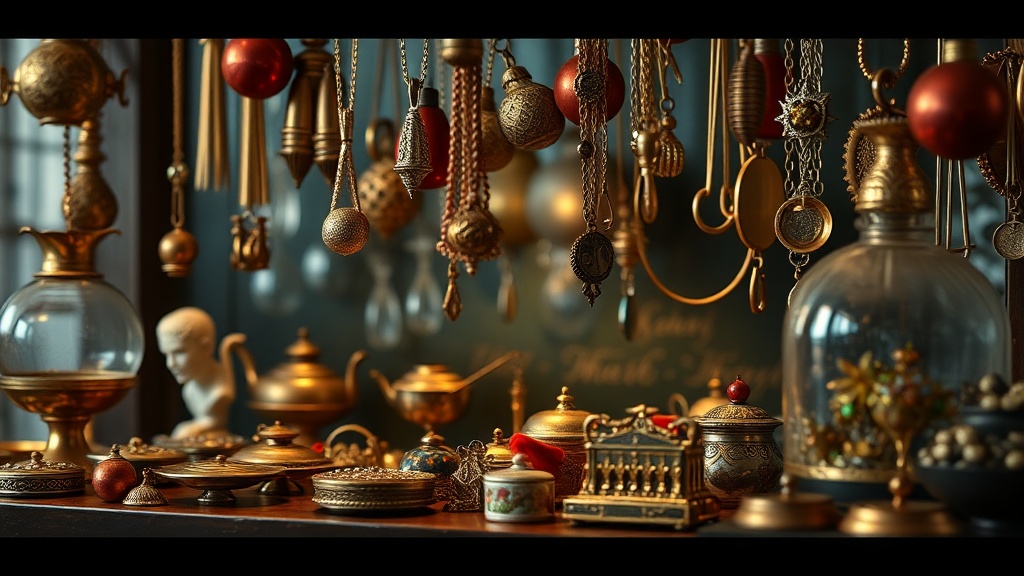
Finding Genuine Vintage Charms for Your Collection

This guide provides specific methods for identifying authentic vintage charms, spotting common reproductions, and verifying material quality. You'll learn how to examine hallmarks, test metal density, and use historical context to separate genuine relics from modern fakes. Whether you collect small metal trinkets or miniature glass bottles, these steps ensure you don't pay a premium for a counterfeit.
How Do I Spot a Fake Vintage Charm?
You can identify a fake by looking for inconsistent weight, lack of hallmarks, and overly perfect-looking surfaces. Real vintage items usually show a level of "character" that modern mass production lacks. If a charm looks too symmetrical or the metal shines with an unnaturally bright, electric luster, be suspicious.
Genuine vintage charms often have tiny imperfections. A 1950s brass charm might have a slight patina or a microscopic scratch from decades of use. Modern reproductions often use high-speed CNC machines or 3D printing, which results in a surface that is almost too smooth. It's a bit of a paradox—the more "perfect" it looks, the more likely it is a modern copy.
Check the attachment point. On many vintage pieces, the jump ring or the loop that connects the charm to the main chain shows signs of hand-soldering or older manufacturing techniques. If the connection looks like a perfect, seamless machine-stamped piece of modern steel, it probably is. It's a small detail, but it's the kind of thing that separates the pros from the amateurs.
Look for these red flags:
- Unnatural Shine: High-gloss finishes that look like cheap plating rather than aged metal.
- Missing Marks: No maker's marks, weight stamps, or date codes where they should be.
- Smell: A strong, metallic "penny" smell can sometimes indicate low-grade base metals that have been artificially aged.
- Weight: A charm that feels hollow or suspiciously light for its size.
If you're unsure about the metal composition, you might want to look into hallmark standards to understand how different eras marked their precious metals. This is a great way to build your foundational knowledge.
What Metal Types Are Most Common in Vintage Collections?
Vintage charm collections typically consist of brass, sterling silver, gold-filled copper, or nickel-based alloys. Knowing these materials helps you understand both the value and the care requirements of your pieces.
Brass was the workhorse of the mid-century era. It's heavy, durable, and develops a beautiful deep gold tone over time. However, it can also oxidize if not stored correctly. If you're dealing with much higher-end pieces, you'll see more sterling silver or even solid gold. These are much more susceptible to scratches and require a gentler touch.
The following table compares common vintage metal types found in small collectibles:
| Metal Type | Typical Era | Visual Characteristic | Durability |
|---|---|---|---|
| Brass | 1940s–1960s | Warm, yellowish hue | High (develops patina) |
| Sterling Silver | Varied | Bright white/grey | Medium (scratches easily) |
| Gold-Filled | Early 20th Century | Deep gold luster | High (thick plating) |
| Nickel/Chrome | 1950s–1970s | Cool, silvery shine | Very High (rust resistant) |
When working with these metals, remember that cleaning is a delicate process. I've written about this before in my post on gentle revival and cleaning, as using the wrong chemical can ruin a vintage finish in seconds. Never use harsh abrasives on gold-filled or brass pieces—it's a one-way trip to a ruined collection.
How Can I Verify the Age of a Charm?
Verification relies on a combination of physical-style cues, manufacturer-specific hallmarks, and the historical context of the design itself. If a charm depicts a specific brand or a piece of technology, the design itself acts as a timestamp.
One of the best ways to verify age is through "designachronisms." For example, if you find a "vintage" charm that depicts a piece of technology that didn't exist during the era the charm claims to be from, you've found a reproduction. This happens a lot in the "small collectibles" world where modern motifs are often slapped onto old-looking metal. It's a common tactic used by low-end manufacturers to capitalize on the vintage aesthetic.
Check the maker's mark. A genuine vintage piece from a reputable company like Tiffany & Co. or a smaller, specialized artisan will have a distinct, often hand-stamped or precisely engraved mark. If the mark is blurry, shallow, or looks "printed" on, it's likely a fake. The precision of the engraving tells a story about the tools available at the time of production.
Also, consider the weight. Older metals were often more substantial. A solid brass charm from 1950 will feel significantly different in your palm than a modern, hollow-cast zinc alloy piece that's been painted to look like brass. This is why I always recommend a digital scale if you're buying high-value items online. Even a single gram of difference can change your assessment of the item's authenticity.
Here's the thing: many people overlook the "feel" of the item. A real vintage charm has a certain density to it. It doesn't feel "toy-like." If you're collecting small glass bottles or specialized caps, the weight of the glass also matters. Old glass was often hand-blown or molded in a way that created slight variations in thickness—something you won't see in modern, perfectly uniform factory-made glass.
If you want to dive deeper into how metal alloys are tested, the National Institute of Standards and Technology provides excellent resources on material science and standardization. While it might seem overly technical, understanding the science of metals helps you trust your eyes more.
When you're out in the field—whether that's at a flea market in Brooklyn or an online auction—always look at the edges. Sharp, jagged edges on a "vintage" piece are a bad sign. Most vintage items have been handled, worn, or at least finished in a way that smooths out those harsh corners. A piece that looks like it just came off a laser cutter is a red flag you shouldn't ignore.
Lastly, don't be afraid to ask for more photos. If a seller won't provide a macro shot of the attachment point or the hallmark, walk away. A transparent seller will have no problem showing you the details that prove the item's pedigree. It's better to miss out on a deal than to buy a piece of junk that will only sit in a drawer.