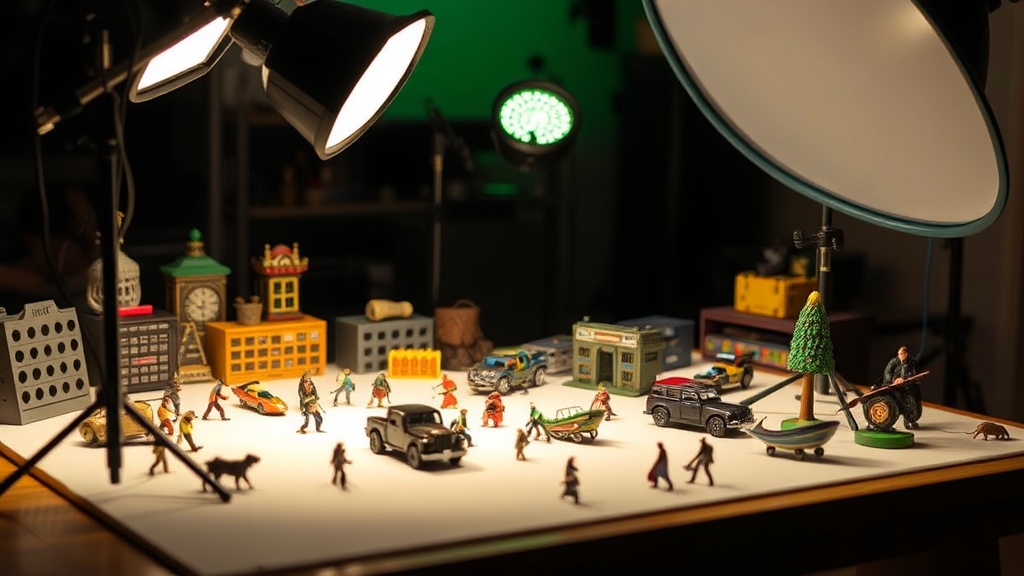
Setting Up a Professional Lighting Layout for Small Collectibles

A single glass apothecary bottle sits under a harsh overhead bulb, casting long, ugly shadows that hide the very details you want to show off. A tiny vintage charm looks like a dull blob of metal rather than a piece of history. This happens because most collectors treat lighting as an afterthought, but it's actually the most important part of your documentation process. This post breaks down how to build a professional lighting setup specifically for small items like glass bottles, caps, and miniature collectibles.
How Do I Light Small Glass Bottles Without Harsh Glare?
To light glass without blinding glare, you need to use soft, diffused light rather than a direct, point-source light. Glass is a reflective surface, which means it reflects everything in the room—including your camera lens and your own face. If you point a bright LED directly at a Cobalt Blue glass bottle, you'll get a white "hot spot" that ruins the shot.
The best way to avoid this is through diffusion. Think of a frosted window versus a clear one. You want the light to hit a surface first, then bounce or pass through a screen before it touches the object. This softens the edges of the light and spreads it out evenly.
Here are the three most effective methods for photographing reflective smalls:
- The Light Box Method: Use a dedicated photo tent or a DIY version made from a white cardboard box. This surrounds the object with white surfaces, creating a controlled environment.
- Bounce Lighting: Instead of aiming a lamp at your bottle, aim it at a white piece of foam board or a wall. The light bounces off the white surface and hits your collectible with a much softer touch.
- The Softbox Approach: If you're serious about this, a small LED panel with a built-in diffusion sheet is a great investment. Brands like Neewer offer affordable options that work well for small-scale setups.
I've spent years photographing tiny metal charms, and I've learned that one bright light is almost always a mistake. It's better to have two low-intensity lights coming from different angles than one high-intensity light. This helps fill in the shadows that one light creates.
When you're working with translucent items, like certain types of vintage glass, you might even want to try "backlighting." Placing a light source behind the object can make the colors pop and show off the internal clarity of the material. It’s a great way to prove the authenticity of a piece, which is something I talk about when discussing how to identify genuine vintage glass bottles.
What Equipment Do I Need for Macro Photography?
You don't need a $3,000 DSLR to get professional results, but you do need a few specific tools to handle small-scale details. Since many collectibles are tiny, you'll likely be shooting in "macro" mode, which allows the camera to focus on objects just inches away.
If you're using a smartphone, you can still get great shots by using a tripod. A shaky hand is the enemy of a sharp photo. Even a cheap tripod from a local electronics store will keep your phone steady enough to capture the fine engravings on a vintage keychain or the texture of a metal cap.
| Equipment Type | Purpose | Budget Option |
| Light Source | Provides illumination | Desk lamp with a white cloth over it |
| Diffusion | Softens harsh shadows | Tracing paper or a white t-shirt |
| Support | Prevents camera shake | A stack of books or a basic phone tripod |
| Background | Provides a clean backdrop | A sheet of black or white cardstock |
Don't forget about the background. A cluttered background distracts from the collectible. For small items, a "seamless" background is best. This is a single sheet of paper that curves from the floor up to the wall behind the object, so there is no visible "line" where the table ends. This creates that professional, floating look you see in high-end auction catalogs.
The catch? If your background is too busy, the eye won't know where to look. Keep it simple. A matte black background makes metallic items look expensive, while a white background makes colorful glass look vibrant and clean.
Can I Use Natural Light for My Collection Photos?
Yes, you can use natural light, but it's much harder to control than artificial light. Sunlight is constantly changing—clouds pass by, the sun moves, and the color temperature shifts from the blue of morning to the orange of evening. This can make your photos look inconsistent if you're trying to build a cohesive catalog.
If you do use natural light, stay away from direct sunlight. Direct sun is too "hard" and creates high-contrast shadows that are nearly impossible to fix in editing. Instead, set up near a window with a sheer white curtain. This acts as a giant, natural softbox. It provides a steady, soft light that is very forgiving for glass and metal.
The problem with natural light is the "color cast." If your window faces a garden, your items might end up looking slightly green. If it's a bright afternoon, they might look too yellow. To fix this, you'll want to use a "White Balance" setting on your camera or phone. Most modern devices have an "Auto White Balance" (AWB) feature, but manual control is always better for consistency.
Here's a quick checklist for setting up your workspace:
- Clear a space on a table near a window (but not in direct sun).
- Lay down your seamless background (paper or fabric).
- Place your collectible in the center.
- Position a white piece of cardboard on the side opposite the window to "bounce" light back into the shadows.
- Check your screen for any bright white "hot spots" on the glass or metal.
I often find that even the best gear fails if the setup is wrong. You can have the most expensive camera in the world, but if you're shooting a highly reflective silver charm under a single bright bulb, the photo will look amateur. It's all about managing the light, not just having the light. If you see a reflection of your phone in the object, move the light or your body slightly. Small adjustments make a massive difference.
One thing to watch out for is the "depth of field." When you're shooting small items, the background often gets blurry. This is usually a good thing—it draws focus to the item. But if you're shooting a set of several bottles, you want all of them to be in focus. To achieve this, move back a little and use a slightly higher f-stop (if using a real camera) or simply ensure your light is bright enough that the camera doesn't struggle to focus.
It's also worth mentioning that lighting can actually help identify a piece's condition. If you're documenting a collection for insurance or sale, you need to show every scratch or dent. A single light source might hide a crack in a glass bottle, but a two-point lighting setup will reveal it. This level of detail is what separates a casual hobbyist from a professional-grade collector.
Steps
- 1
Choose a Neutral Background
- 2
Position Your Primary Light Source
- 3
Use Diffusers to Minimize Glare
- 4
Add Secondary Fill Light for Shadows